


Homocysteine
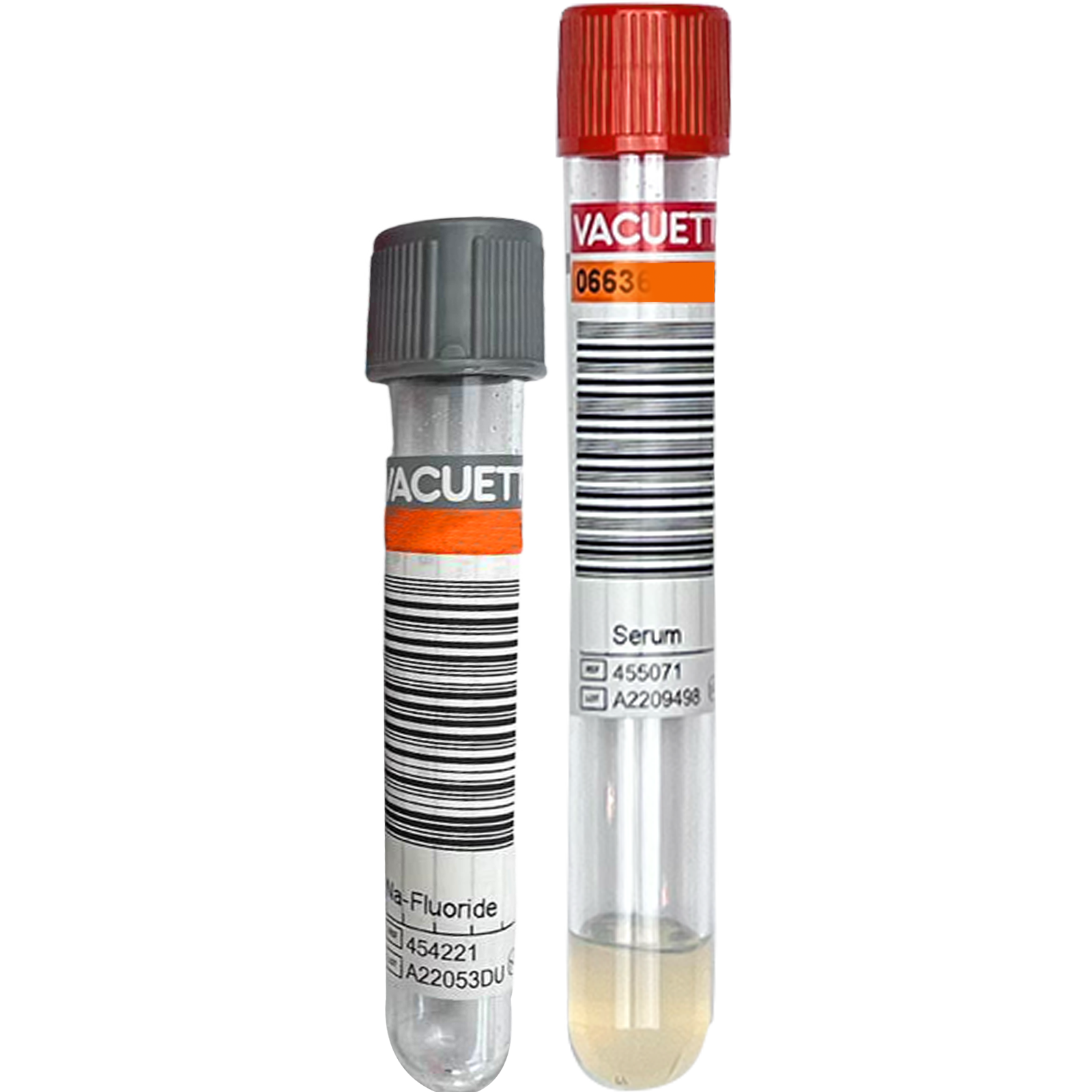
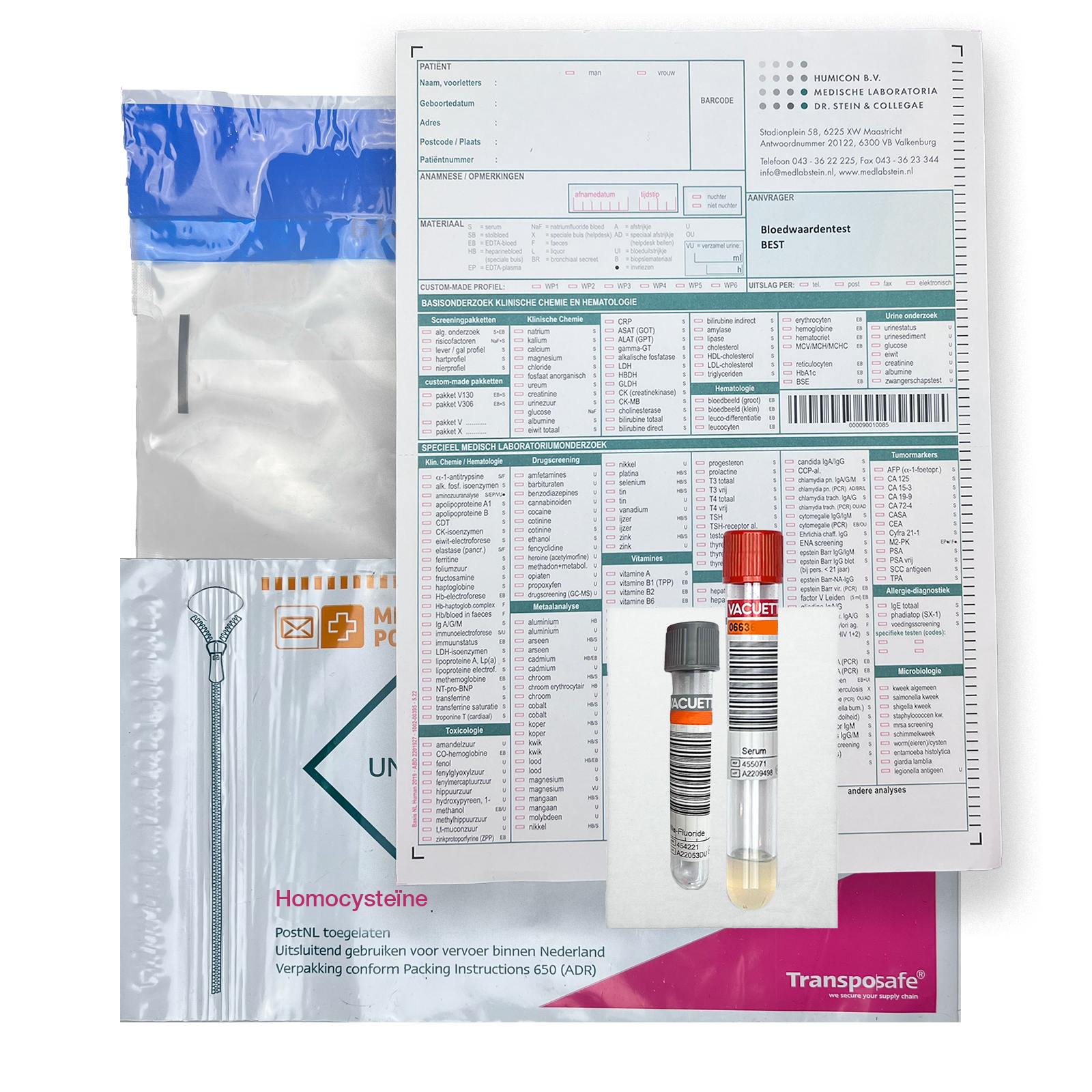
Homocysteine increases the risk of cardiovascular disease. Stein from NaF. (grey tube)
Homocysteine is a substance produced by the body during the metabolism of the necessary amino acid methionine. Increased homocysteine levels can occur due to genetic disorders, but also due to a lack of vitamin B11 (folic acid), whether or not in combination with a lack of vitamin B6 and B12. As age increases, normal homocysteine levels also increase by about 5 to 10% every 10 years.
Causes elevated homocysteine:
- Hereditary defects leading to errors in metabolism around homocysteine
- A deficiency of vitamin B11 (folic acid) and/or vitamin B6 and B12
- Ageing, every 10 years the homocysteine level increases by 5 to 10%.
- Lifestyle, including smoking and drinking coffee.
For proper interpretation of the results, it is recommended that vitamin B6, vitamin B12 and folic acid be also determined.
- An early vitamin B12 deficiency can be detected withactive vitamin B12 (Holo-TC).
- Vitamin B12 absorption problems can be measured withVitamin B12 Methylmalonic Acid.
- Hereditary vitamin B12 absorption problems are the result of this test.
Elevated homocysteine levels indicate a functional B12 deficiency, even if the blood level of B12 is still in the (low) normal values! Homocysteine is an amino acid that can be produced in the human body from another amino acid, methionine. This conversion takes place with the help of enzymes. Under normal circumstances, the homocysteine produced is transformed again or broken down so that the amount in the body does not increase.
If this process is incomplete, homocysteine can continue to circulate in the blood. Increased homocysteine levels (elevated homocysteine) can be caused by genetic disorders, but also by a lack of folic acid, vitamins B6, B2, B12. These have a function as a coenzyme in the breakdown of methionine. Normal homocysteine levels increase with age: by as much as 5 to 10% per decade.
The normal homocysteine level in the blood is increasingly set in England and America at 7 µmol/litre for men and 6 µmol/litre for women. A value above 15 µmol/liter is too high.
This level must be determined when someone has not eaten or drunk for 12 hours (is sober).
Homocysteine and nutrition
Vegetables, fruits and especially sprouts (alfalfa, bean sprouts, broccoli sprouts, etc.) contain substances that lower the values. The most effective anti-homocysteine products are:
Vegetable sprouts, avocado, cottage cheese, ricotta, fish, oysters, legumes, egg, onions,
garlic, nuts, seeds (tahini), algae, wheat germs, poultry, broccoli, cabbage, chicory, leafy vegetables, muesli and asparagus.
You need to be sober for 12 hours for blood sampling for this test.
Do not send in during extremely hot weather and on hot days hand over to a PostNl service point, do not put in the mailbox. Keep blood in the refrigerator in case of early collection on the day of shipment.


