
Category: General
High cortisol levels can really take a toll on you. Here’s how to get rid of them.
Cortisol is an important hormone produced naturally by the body. Among other things, it keeps us awake and alert and regulates various aspects of our metabolism. So it’s a useful hormone. But if you have too much of it, it turns against you. Symptoms like weight gain, high blood pressure, restlessness, and insomnia start to appear. You want to get rid of those.
Here are seven tips to help you actively lower your cortisol levels on your own.
Cortisol is an important hormone produced naturally by the body. Among other things, it keeps us awake and alert and regulates various aspects of our metabolism. So it’s a useful substance. But if you have too much of it, it turns against you. Symptoms like weight gain, high blood pressure, restlessness, and insomnia start to appear. You’ll want to get rid of that.
We’ll give you seven tips to actively lower your cortisol levels on your own.
High cortisol: what causes it?
Cortisol, also known as the stress hormone, is produced by the adrenal glands in response to stress. Back in prehistoric times, that was useful. A surge of cortisol made you alert so you could quickly flee or fight. These days, stress doesn’t come from a saber-toothed tiger but from work, financial worries, raising your children, and so on. And that stress isn’t just temporary—it’s constant. The result: chronically elevated cortisol levels.
Elevated cortisol levels can also be caused by medication, inflammation in the body, or an adrenal gland disorder. Therefore, if your cortisol levels are elevated, always have a doctor make a diagnosis.
More importantly: How do you get rid of it?
The good news is: there’s a lot you can do on your own to lower your cortisol levels. Here are the seven most important tips.
Eat Healthy
Avoid processed foods, especially those high in simple carbohydrates and sugars. Choose fresh foods and eat plenty of fruits and vegetables. Pan-fry a tasty, fatty fish for the omega-3s. Don’t drink too much caffeine, and make sure to drink enough water. For a snack, opt for a handful of (wal)nuts or extra-dark chocolate.
Exercise
Exercise for 30–60 minutes a day. Walk, bike, swim, or run. Do something. A sedentary lifestyle is the new smoking. But be careful. Too much isn’t good either. Intense endurance workouts actually raise cortisol levels. So take it easy.
Relax
That’s easier said than done when you’re running on high cortisol. Give it a try anyway. For example, through yoga, breathing exercises, meditation, or mindfulness. If that’s not your thing, find something else that helps you relax. Take a walk in the woods or let your mind wander while listening to your favorite music.
Get enough sleep
If you’re awake too much, the “wakefulness” hormone cortisol will also remain elevated. So make sure you get enough sleep. About seven to nine hours a night is ideal. Having trouble falling asleep at night? Then limit your screen time in the evening. Put away that phone or tablet and turn off the TV. I bet you’ll fall asleep more easily!
Hug more
Yes, really! When you hug, you produce oxytocin. That hormone lowers your cortisol levels. A hug lasting at least 20 seconds to a minute is best. And do that several times a day. Now that’s a doctor’s prescription for love.
Take herbs and dietary supplements
Try stopping by a health food store. Consider rhodiola, glutamine, or a type of ginseng. Vitamin B5 and folic acid can also help. Or choose an herbal supplement like tulsi (holy basil) or magnolia.
Laugh
Laughing is good for your health. It lowers all kinds of stress hormones, including cortisol. Catch a good sitcom or rewatch the New Year’s comedy special. But don’t do it late at night, or you won’t be able to sleep again.
Are you experiencing symptoms such as sudden weight gain, restlessness, or insomnia? If so, get tested to see if your cortisol levels are elevated.
Cortisol blood test: cortisol, the stress hormone produced by the adrenal glands

or
Cortisol daily curve saliva test: burnout saliva test—burnout or depression
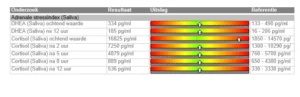
or
Does measuring your cortisol as part of the test make you tired?
| Time of day | Normal | Increased |
| In the morning | 138–635 nmol/L | Higher than 800 nmol/L |
| in the afternoon | 83–442 nmol/L | more than 500 nmol/L |
| in the evening | 83–276 nmol/L | more than 300 nmol/L |
Blood cortisol levels are highest early in the morning, right after waking up, and lowest in the evening. For people who work irregular shifts, including night shifts, the cortisol pattern is often disrupted.
Our lab uses the following guidelines: if you have your blood drawn between 6 a.m. and 10 a.m. in the morning, your blood levels should be between 171 and 497 nmol/l. Between 4:00 p.m. and 8:00 p.m., the result should be between 75 and 287 nmol/l.
Have a question about your results?
Leave a comment. Our specialists are happy to help you.