Bilirubin indirect unconjugated
Bilirubin indirectly is measured from serum in this test (card stein)
Non-conjugated bilirubin is a yellow pigment formed by the breakdown of the heme component of hemoproteins (myoglobin, cytochromes, but primarily hemoglobin (80%)).
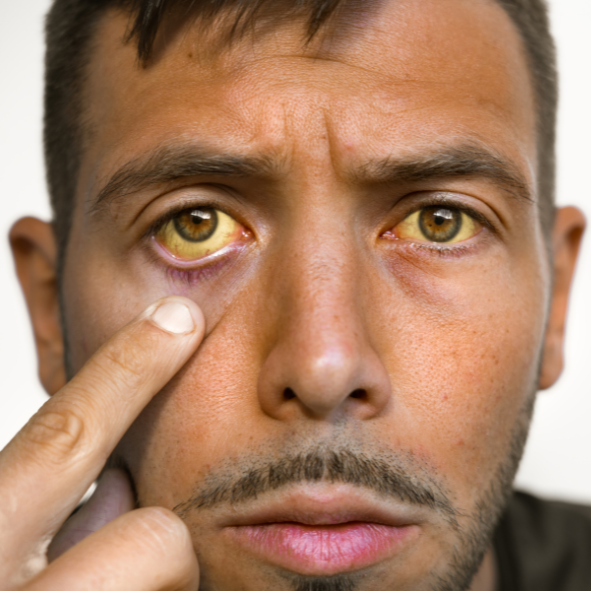
The breakdown of heme groups occurs largely outside the liver, by hemeoxygenase, and the initially formed unconjugated bilirubin is released into the systemic circulation. This pigment is poorly water-soluble and is therefore primarily bound to albumin in the blood. It is transported through the bloodstream to the liver and absorbed into the hepatocytes where it is converted to the water-soluble bilirubin glucuronide which is very rapidly excreted in the bile ducts and drained through the bile ducts into the gastrointestinal tract. Increased indirect bilirubin is seen with increased bilirubin production (hemolysis, ineffective erythropoiesis) and/or a defect in uptake and/or glucuronidation in the liver (icterus neonatorum, Gilbert syndrome, Crigler-Najjar disease). Combining bilirubin values with other hemolysis parameters can often distinguish hemolysis from a conjugation disorder.
The main causes of increased conjugated bilirubin are:
- excessive breakdown of red blood cells
:-> hemolysis (e.g., malaria, rhesus incompatibility, etc.)
-> deficiency erythropoiesis (e.g., pernicious anemia)
-> hypersplenism
- insufficient uptake of bilirubin
:-> newborns and premature infants->
Crigler-Najjar syndrome (deficiency of glucuronyltransferase)
There are two types of bilirubin:
- indirect or non-conjugated bilirubin (for transformation in the liver)
- direct or conjugated bilirubin (after transformation in the liver)
Together, these two are called total bilirubin.
An increase in direct bilirubin indicates a blockage in the bile ducts or liver damage.
An increase in indirect bilirubin is an indication that too many red blood cells are being broken down, such as in hemolytic anemia. together, these two values form the Bilirubin Total.
Bilirubin concentrations in serum are age- and sex-dependent.