Whooping Cough Antibodies – PT-IgG Blood Test
Still coughing? Whooping cough could be the cause.
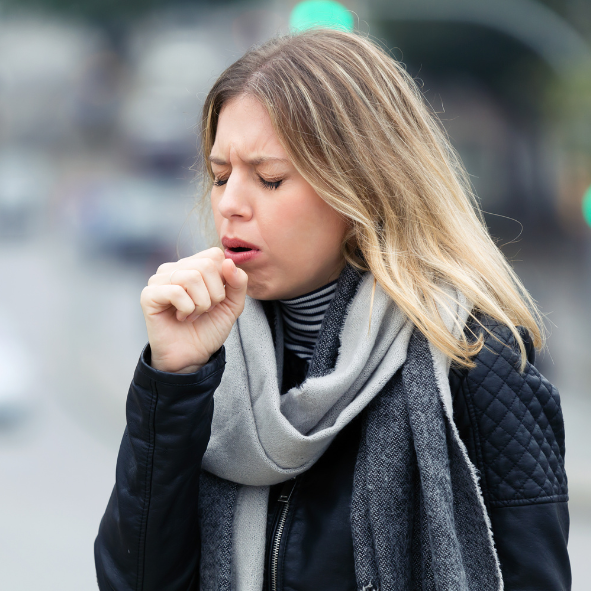
A cold that turns into recurring coughing fits. A cough that wakes you up at night, makes you gag, or sometimes causes you to vomit. These symptoms may be consistent with whooping cough. In adults, the characteristic whooping sound during inhalation is often absent; a persistent cough may be the main symptom.
This blood test checks for IgG antibodies against pertussis toxin (PT). This is a protein produced by Bordetella pertussis, the bacterium that causes classic whooping cough. Your body can produce these antibodies after an infection, but also after a whooping cough vaccination.
PT stands for pertussis toxin: a toxin produced by the whooping cough bacterium Bordetella pertussis. The P stands for pertussis (whooping cough) and the T for toxin.
When is this test useful?
This antibody test is particularly suitable for investigating a possible whooping cough infection if you ’ve had symptoms for more than about three weeks.
Antibodies do not develop immediately after infection. The immune response usually begins two to four weeks after the onset of illness and peaks after about three to eight weeks.
Have your symptoms just started? If so, a whooping cough PCR test is usually more appropriate. A PCR test examines respiratory tract samples for the bacterium’s DNA.
| Situation | Which test is usually recommended? |
|---|---|
| Coughing for less than about three weeks | PCR on respiratory specimens |
| Symptoms that have lasted longer than about three weeks | PT-IgG antibodies in blood |
| Negative antibody test, but suspicion persists | Repeat test possible after at least 14 days |
| Recent whooping cough vaccination | Discussion regarding test selection and interpretation |
These are general guidelines. Age, vaccination history, and the progression of symptoms may influence the decision.
What does the test measure?
The test measures the amount of IgG antibodies against pertussis toxin in your blood.
This test:
can help diagnose a recent infection with Bordetella pertussis;
does not test for Bordetella parapertussis;
does not directly show whether the bacteria are still present;
does not provide certainty about your contagiousness or protection against whooping cough.
How is the blood drawn?
This test requires a blood sample drawn from a vein. The laboratory analyzes the serum: the liquid part of the blood that remains after clotting.
After placing your order, follow the sample collection instructions from Bloedwaardentest. When placing your order, please provide the following:
When did your first symptoms and the cough start?;
When was the last time you were vaccinated against whooping cough?
This information will help you interpret your results.
What does the result mean?
Less than 40 IU/mL
According to the laboratory specifications, a value below 40 IU/mL is considered negative. This means that the measured level of PT-IgG is below this threshold.
A negative result does not completely rule out whooping cough. If you get tested too early, your body may not have produced enough antibodies yet.
Starting at 40 IU/mL
A level of 40 IU/mL or higher does not automatically mean you have a recent whooping cough infection. The significance of the result depends on the level of the value, your symptoms, the duration of your illness, and whether you’ve recently been vaccinated.
A significantly elevated value, when accompanied by appropriate symptoms, may indicate a recent infection. The interpretation and any additional reference ranges listed on your lab report should be used as a guide.
When is a repeat test necessary?
If the result is negative or inconclusive and the suspicion persists, a second blood sample may be needed after at least 14 days. By comparing both results, it’s possible to determine whether antibody levels are rising.
Frequently Asked Questions
Can I use this test to find out if I’m immune to whooping cough?
No. A positive PT-IgG result does not prove that you are protected. There is no generally accepted antibody threshold that can reliably determine individual protection against whooping cough.
Can this test show whether my vaccination was effective?
PT-IgG antibodies may be detectable after vaccination. However, this result is not a reliable individual indicator of the protection provided by your vaccination.
Does a recent whooping cough vaccination have an effect?
Yes. In particular, a vaccination within the past year can make interpretation difficult: elevated antibody levels may be due to the vaccination. Therefore, please include your vaccination date.
What’s the difference between this and a whooping cough PCR test?
A PCR test directly detects bacterial DNA in respiratory specimens and is particularly useful early in the course of the illness. This blood test measures your antibody response and is especially useful later on.
Is this the same test as the IgG confirmation test?
No. This is a quantitative PT-IgG test: you’ll receive a measured antibody level. The separate IgG confirmation test uses an immunoblot to assess an antibody pattern. It can be used as a supplementary test upon the laboratory’s recommendation.
Can the test show whether I’m still contagious?
No. Antibody levels can remain elevated for months after an infection. The test results do not provide direct information about your contagiousness on the day the sample was taken.
Is this test also suitable for young children?
For children younger than one year old and unvaccinated children younger than four years old, the RIVM recommends a PCR test regardless of how long the illness has lasted. Therefore, have a doctor assess the appropriate test for young children.
When should I seek immediate medical attention?
If you experience shortness of breath, pauses in breathing, or severe illness, contact a doctor immediately. Also, seek medical advice promptly if you suspect whooping cough and are in contact with a young baby or someone in the final weeks of pregnancy. In these situations, do not wait for the test results.
Technical test information
| Section | Specifications |
|---|---|
| Test | Bordetella pertussis Toxin Antibodies (IgG) |
| Short name | PT-IgG |
| Product code | BOPTG |
| Materials | Serum, 0.50 mL for laboratory analysis |
| Decrease | Blood draw from a vein |
| Method | CLIA: chemiluminescence assay |
| Reference Value | <40 IU/mL |
| Unit | IE/ml, equivalent to IU/ml |
| Testing Days | Monday–Friday; this is not the turnaround time |
| Accreditation determination | Accredited under ISO 15189 |
Always follow the included packaging and shipping instructions for the blood sample.
Categories: Diagnosis of Infections · Respiratory Pathogens
Resources