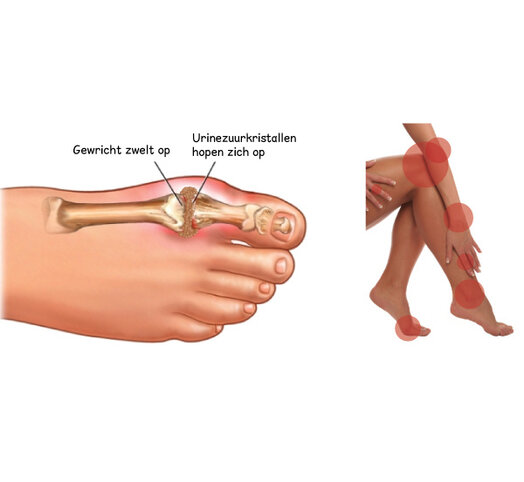
Uric acid gout?
Blood tests uric acid, also known as Urate, is measured from blood.
A uric acid test is often requested to find an explanation for symptoms of gout. An elevated result can support the diagnosis. However, the test is not specific to gout, as an elevated result can occur in other diseases as well. Conversely, elevated uric acid levels lead to gout symptoms only in a limited number of patients.
Patients with gout suffer from painful joints, usually in the big toe, sometimes in the midfoot, ankle, knee or wrist. When inflammation sets in, the joint becomes thick, red and warm. Often an attack is triggered by a high-protein diet or alcohol consumption.
What does the rash mean?
An increased concentration of uric acid means that the body cannot properly process the breakdown of cells and cellular materials. Accumulation of uric acid can cause gout (joint inflammation) and kidney stone formation in a small percentage of patients. Increased levels of uric acid require additional testing to identify the cause (inherited metabolic disease, psoriasis, poor kidney function, leukemia, chemotherapy or radiation).
Low concentrations of uric acid are seen much less frequently and rarely cause concern. It may be related to certain liver or kidney diseases, exposure to toxic substances and very rarely to an inherited metabolic disease. Detecting these conditions requires other tests and the uric acid test is not appropriate.
What is gout?
Gout is an inflammation caused by a buildup of uric acid in the blood. Uric acid forms crystals in a joint that cause it to suddenly become violently inflamed. This often happens at night, during which time the joint becomes very painful and stiff. It is red, warm and swollen. It often involves the joint between the big toe and the midfoot, and sometimes a joint in the midfoot, ankle, knee or wrist.
Who can get it?
People with too much uric acid in the blood: of those, 10 percent will ever have a gout attack. People with kidney disease and leukemia patients are more likely to get gout, as well as people who drink alcohol excessively or take certain medications, such as urine pills.
How common is it?
With age, the chance of getting gout increases. Men are affected four times more often than women. Ultimately, more than 4 percent of men over the age of 75 suffer from gout. A gout attack usually passes within one to three weeks. It recurs in almost everyone. Within a year, 70 percent experience a second attack. Only 7 percent have not had a second attack after 10 years.
What can you do against an attack?
The doctor can give you a painkiller (diclofenac, naproxen or ibuprofen), which will quickly reduce the pain. If that doesn't help, you may be given the drug colchicine. In the first days of a gout attack, resting and cooling the joint helps. Later, exercise is actually good.
What can you do yourself to prevent gout?
Excessive users of alcohol can start drinking less, users of urine pills can switch to a different type of urine pill. It is recommended to consume at least two liters of fluids per day. It is possible to prevent a gout attack by eating fewer foods containing purine (chicken or game). Purine increases blood uric acid levels.
Food list of products containing purine
>150mg / 100g
- Fish: anchovies, mackerel, mussels, herring, sardines, smelt
- Meat: organ meat
- Yeast-rich products (such as marmite)
75-150mg / 100g
- Fish: cod, haddock, trout, salmon, red mullet
- Meat: veal, game, mutton, bacon
- Beer and alcoholic beverages, non-alcoholic beer