Follow-up test allergy inhalation mix
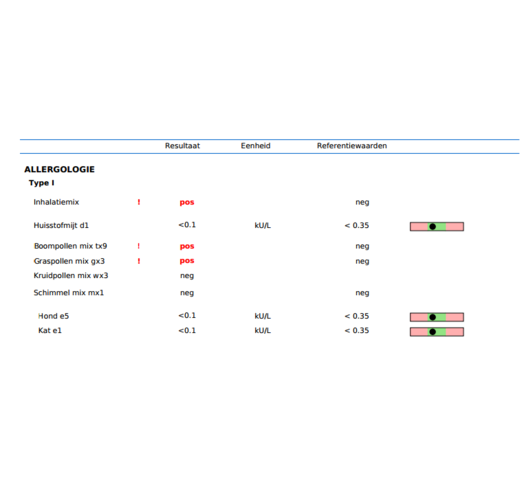
Are you allergic to inhaling certain substances? The Screen Inhalation Allergen Test (SX1) examines whether your symptoms such as sneezing, tightness of the chest, itchy eyes or stuffy nose may be caused by an allergy to common airborne substances.
This test measures IgE antibodies to a mixture of the most common inhalation allergens. If this initial screening gives a positive result, follow-up testing is automatically done to determine exactly which substance(s) you are allergic to.
The first screening (SX1) contains the following allergens:
- Timothy
- Rye
- Birch
- Mugwort
- Cladosporium herbarum (fungus)
- House dust mite (Dermatophagoides pteronyssinus)
- Cat dandruff (E1)
- Dog dandruff (E5)
If the result is positive, follow-up testing for specific allergens is automatically performed:
- Grasses and grains: Timothy (G6), Rye (G12)
- Herbal pollen: Mugwort (W6)
- Tree pollen: Birch (T3)
- Fungi: Cladosporium herbarum (M2)
- Dander: Dog (E5), Cat (E1)
- House dust mite: Dermatophagoides pteronyssinus (D1)
This approach ensures that you know immediately which specific inhalation allergens you are sensitive to.
Overview of possible allergies in the follow-up test:
- Tree pollen: Alder, Birch, Hazelnut, Oak, Willow
- Grass pollen: Common ryegrass, ryegrass, Timothy grass, rye, striped whitebush
- Herb pollen: Mugwort, Plantain, Nettle
- Fungi: Penicillium notatum, Cladosporium herbarum, Alternaria tenuis
- House dust mite
- Dander of dog and cat
The inhalation mix provides quick insight into whether you are sensitive to one or more of these substances. A negative result means that an allergy to these inhalation allergens is unlikely. If the result is positive, a more extensive analysis automatically follows to determine the exact cause.
This test is a complementary health check. The results are not always recognized by general practitioners or regular health care providers. For advice or guidance you can contact the specialized therapists of Blood Value Testing.