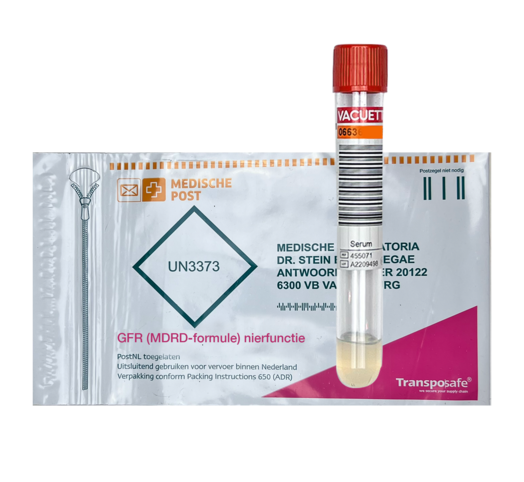

GFR (CK-DEPI formula) renal function
The CKD-EPI formula is used to calculate an eGFR based on the creatinine level in the blood. eGFR stands for estimated Glomerular Filtration Rate and provides an estimate of the kidneys’ filtration function.
Please note: This calculation can only be performed in conjunction with a creatinine test.
What is calculated?
Creatinine is a waste product produced, among other things, during normal muscle metabolism. The kidneys remove creatinine from the blood.
The eGFR is calculated using the CKD-EPI formula based on the measured creatinine level, age, and sex. The result is expressed in ml/min/1.73 m².
The current CKD-EPI formula does not use a correction factor for race or ethnicity.
How is the eGFR interpreted?
In adults, eGFR is generally classified as follows:
90 or higher: normal or high
60–89: mildly reduced
45–59: mildly to moderately reduced
30–44: moderately to severely reduced
15–29: severely reduced
Lower than 15: severely reduced / kidney failure
An eGFR between 60 and 89 does not automatically indicate chronic kidney damage. Even a single instance of a low eGFR is insufficient to diagnose chronic kidney damage. To make this diagnosis, doctors consider factors such as how long the abnormality has been present and whether there are other signs of kidney damage, such as elevated levels of albumin in the urine.
Important considerations for interpretation
Because the eGFR is calculated based on creatinine, factors that affect creatinine levels can also influence the calculated kidney function. Examples include:
very high or very low muscle mass;
intense physical exertion;
nutrition;
disease;
changes in fluid balance.
That is why the eGFR must always be interpreted in the proper context.
Is your eGFR unexpectedly low, or has it changed significantly compared to previous measurements? If so, discuss the results with your primary care physician or treating healthcare provider.
This information is intended as a general explanation. A blood test result alone does not constitute a diagnosis and is not a substitute for personal medical advice.